
 Ubud · Gianyar · Bali
Bali Stone Statues: Authentic Sculptures from Bali
Explore our range of handcrafted stone statues from Bali, available for export with clear MOQ and FOB terms. Ideal for garden centers, landscapers, and interior designers.
What are you sourcing?
Tell us what you need and we'll guide you to the right product and next steps.
For businesses seeking unique, handcrafted decor, Bali stone statues offer a distinctive blend of cultural heritage and artisan skill. As a key player in the export market, Bali Stone Statues Export connects buyers with a rich tradition of craftsmanship, providing custom solutions and reliable shipping options for international markets.
Craftsmanship Rooted in Tradition
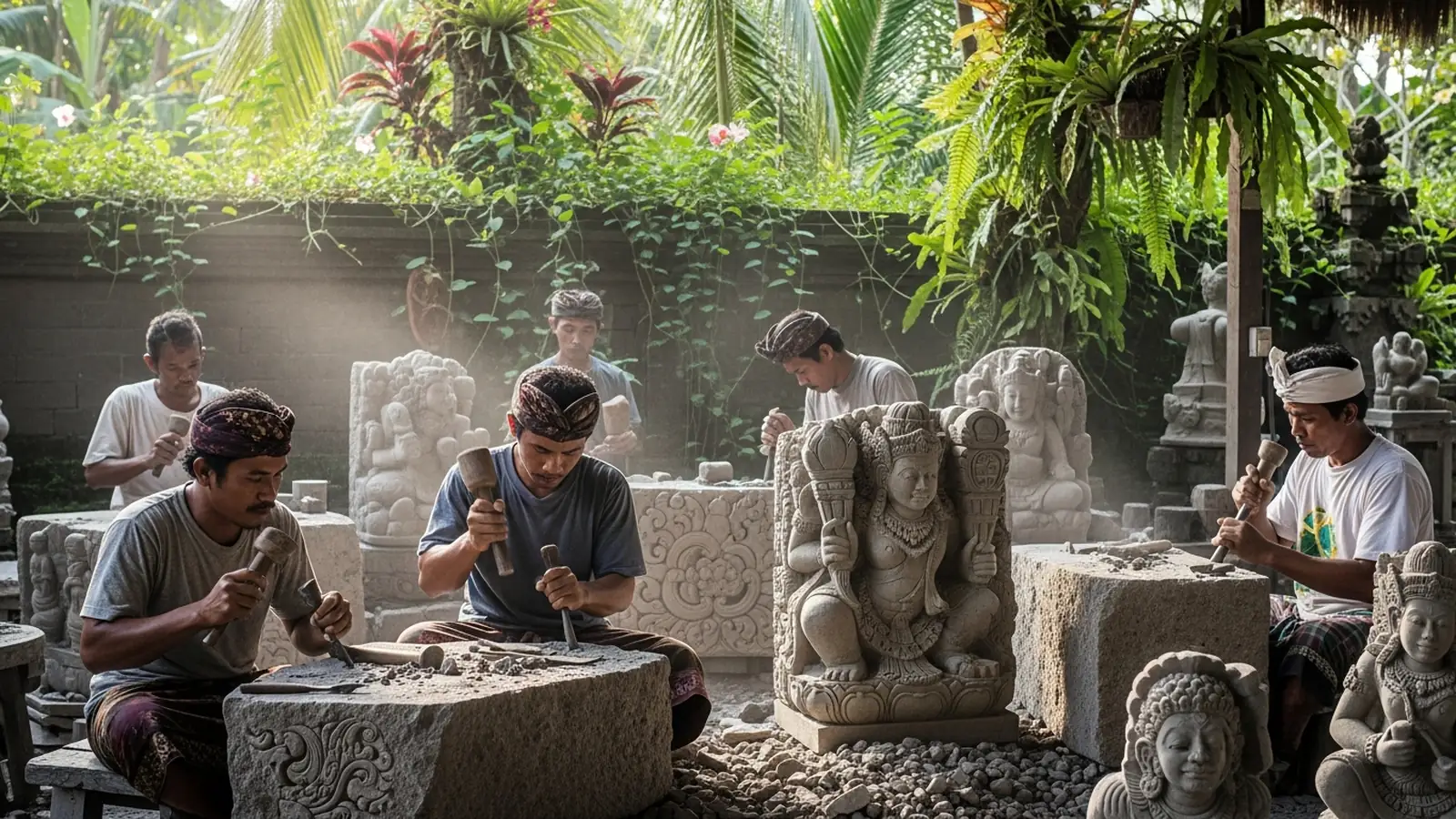
Bali is a hub for stone statue production, with workshops primarily located in Ubud, Batubulan, and other craft villages. The artisans here have honed their skills over centuries, creating statues that are not only decorative but also deeply spiritual. The carving tradition in Bali is intricately linked with religious practices and temple architecture, ensuring each piece carries cultural significance. Balinese stone statues typically feature Hindu and Buddhist deities like Ganesha, Buddha, and Shiva, as well as guardian figures known as Dwarapala. These statues are often placed at entrances to protect homes and temples. The production process involves carving volcanic or river stone sourced from Bali and nearby islands, chosen for its durability and suitability for outdoor use.
The Art of Stone Selection
Selecting the right stone is a critical first step in the creation of Balinese stone statues. Artisans primarily use volcanic stone, which is abundant in Bali due to its volcanic geography. This type of stone is favored for its resilience against weathering, making it ideal for outdoor sculptures. River stone is another popular choice, known for its smooth texture and ease of carving. The selection process is meticulous, with artisans often visiting quarries to choose stones that meet specific criteria for size, color, and texture. This attention to detail ensures that each statue not only embodies artistic vision but also stands the test of time.
Customisation and Flexibility for Buyers
Balinese workshops are adept at producing custom-made stone statues tailored to buyer specifications. Clients can specify size, design, and finish to suit their needs, whether for domestic settings or international export. This flexibility is a significant advantage for businesses seeking unique pieces that align with specific aesthetic or cultural requirements. For instance, Yuli Yudhistira Stone Carving offers bespoke services, accepting orders and inquiries via email and WhatsApp, providing a direct communication channel for detailed custom orders. The ability to customise ensures that each piece can be a perfect fit for its intended environment, from serene gardens to grand hotel lobbies.
Efficient Export and Shipping Solutions
Bali’s stone statue export market is well-supported by a network of experienced shipping agents. These agents handle the logistics of crating and shipping heavy stone items, offering both door-to-door and port-to-port services. Sea freight is the preferred method for international buyers, given the weight and volume of stone statues. Specialized agents in Bali work closely with statue companies to ensure secure packaging and compliance with international shipping standards. For smaller pieces, some buyers opt for extra airline baggage, though larger statues typically exceed airline limits and require freight shipping. Buyers are advised to consider shipping costs, which can be significant relative to the statue price, and to confirm all arrangements with their chosen freight forwarder.
Market Applications and Buyer Segments
Balinese stone statues are popular in various market segments, including garden decor, hotel landscaping, and villa design. Wholesale suppliers like Bali Wholesale Market cater specifically to these sectors, offering a wide range of products from Japanese-style lanterns to elaborate garden pots. The statues’ appeal lies in their aesthetic and spiritual resonance, making them sought-after items for businesses aiming to create harmonious and culturally rich environments. International buyers often seek statues that follow global themes, such as the “peaceful Buddha” or “meditating Ganesha,” to cater to a broad audience in home and garden decor markets.
Pricing and Negotiation Insights
Pricing for Bali stone statues varies based on size, complexity, and order volume. For retail tourists, small artisan pieces often start in the tens of US dollars, while larger, more detailed statues command higher prices. Wholesale buyers typically negotiate prices per piece or per cubic meter, with potential discounts for larger orders. It’s essential for buyers to engage directly with suppliers to obtain current pricing and to discuss terms that suit their budget and logistical needs. Understanding the pricing structure helps in making informed purchasing decisions and maximizing value.
Compliance and Customs Considerations
Exporting stone statues from Bali involves navigating customs regulations in the buyer’s home country. Shippers in Bali prepare the necessary documentation to ensure smooth customs clearance, including import duties and inspections. Buyers must be aware of their country’s specific import requirements and work with their shipping agent to comply with these regulations. Proper documentation and understanding of customs processes are crucial for avoiding delays and additional costs.
Connecting with Balinese Artisans
For buyers interested in establishing direct relationships with Balinese artisans, visiting the workshops in Bali is highly recommended. This approach allows for a firsthand view of the craftsmanship and the opportunity to discuss projects directly with the artisans. Yuli Yudhistira Stone Carving, for example, welcomes visitors to their shop, offering an efficient way to finalize purchases and gain insights into the production process. This personal connection can enhance the buying experience and provide a deeper appreciation for the artistry involved.
Environmental and Ethical Considerations
The production of stone statues in Bali also involves environmental and ethical considerations. Artisans are increasingly aware of sustainable practices, such as responsible sourcing of materials and minimizing waste during the carving process. Some workshops are adopting eco-friendly methods to reduce their carbon footprint, aligning with global trends towards sustainability. Buyers are encouraged to inquire about these practices, as supporting environmentally conscious artisans can contribute to the preservation of Bali’s natural resources and cultural heritage. Ethical considerations, including fair labor practices, are also important to ensure that artisans receive fair compensation for their work.
Ready to explore the exquisite world of Bali stone statues? Contact us today to discuss your project needs and discover how we can bring a touch of Balinese craftsmanship to your business. Visit our contact page for inquiries and orders.